Reconstructing Heather-Reinforced Earth: Material Understanding and Embodied Knowledge in Ms. Fr. 640
Xin Gao
Fall 2025, HIST GU4962: Making and Knowing in Early Modern Europe: Hands-On History
Abstract
This project reconstructs a sixteenth-century recipe for earthen wall construction recorded in BnF Ms. Fr. 640 (fol. 14r). The manuscript describes tamping moistened earth between wooden boards and strengthening it by intermixing it with branches of heather or similar things. Through this process, early modern builders combined local materials with practical, embodied knowledge to create durable structures. Using small-scale reconstruction, the study investigates how soil, water, and heathers behave during mixing, layering, and compaction. The making process is treated as a reconstruction experiment that reveals the sensory judgments, gestures, and material reasoning embedded in the original recipe. By integrating textual analysis, experimental making, and reflective documentation, the project demonstrates how artisanal practice functioned as a form of embodied knowledge.
1. Introduction
The recipe for constructing earthen walls recorded in the French manuscript BnF Ms. Fr. 640 (fol. 14r, “For walls of earth and rustic construction”) describes a technique in which moistened earth is mixed with branches of heather or similar materials and tamped between wooden boards. Like many technical instructions found in early modern artisanal writings, the recipe reduces a complex craft process to brief cues, encoding shared knowledge only partially captured in textual form. The recipe reflects a broader epistemic feature of early modern making: key operational judgments were not transmitted primarily through writing but through sensory experience, embodied practice, and continuous interaction with materials.1
This study treats the recipe as both a technical procedure and a record of embodied knowledge. Through small-scale reconstruction, it examines how early builders may have assessed moisture content, manipulated earthen mixtures, integrated plants, and modulated tamping force, forms of situated judgment implied but not articulated in the manuscript. Reconstruction thus becomes an interpretive method, transforming the recipe from a static text into a dynamic making process.
Methodologically, the project integrates three complementary components:
- Textual analysis, which translates, contextualizes, and interprets the recipe within the framework of early modern craft theory;
. Experimental reconstruction, using soil and dried heather to reproduce the operational sequence and observe the material behaviors; and
- Reflective documentation, which records tactile, visual, and acoustic feedback encountered during mixing, forming, and tamping.
This combined approach makes it possible to access dimensions of knowledge inaccessible through textual analysis alone, especially the multisensory judgments required to interpret indeterminate terms such as “moistened earth” or “beaten & tamped down.”
Situated within the interrelations among text, material behavior, and embodied practice, this study demonstrates that reconstruction serves not only to recover historical techniques but also to reconstruct the epistemic modes through which early modern craftsmen understood and transformed the natural world.[^] In doing so, it brings into view the traditional intelligence embedded in early modern earth construction, wherein human sensories, natural materials, and environmental conditions jointly constitute the technical system.
. Textual Analysis of the Recipe
2.1 Material logic and regional practice in sixteenth-century Europe
The recipe on fol. 14r begins with an interesting and remarkable observation: swallows, the author notes, teach us this technique by building nests from earth reinforced with plants. This parallel between animal and human construction provides an entry into early modern ecological thinking. The manuscript frames earth and plants as elements of a shared environmental logic, in which the structural behaviors of natural materials could be learned through observing animal “engineers” in nature.
This ecological framing provides an interpretive foundation for understanding the material choices that follow. Across sixteenth-century Europe, earthen construction formed a coherent body of embodied knowledge shaped by local environment, material availability, and craft traditions. Rather than relying on abstract standards, builders operated through regionally grounded material logics.
This material logic can be observed in sixteenth-century Italian military engineering. Giovanni Battista Belluzzi’s Trattato delle fortificazioni di terra (c. 1550) offers a systematic account of earthen fortification techniques that rely extensively on local plants, including brushwood (frasca), bundled shrubs (stipa), vines (vimini), and timber stakes, to stabilize soil, regulate moisture, and accommodate settlement.2
In the heathland ecologies of western and northwestern Europe, regions spanning France, Scotland, Ireland, northern England, and parts of Scandinavia, nutrient-poor, acidic soils supported dense growth of Calluna vulgaris (heather).3 Such environments produced a material landscape in which earth and locally available plants formed the primary resources for vernacular construction. In this context, heather functioned as a regional analogue to the plant reinforcements described by Belluzzi.
Historical evidence confirms the widespread and sustained use of heather within vernacular earthen systems. In France, heathers were routinely mixed into rammed earth.4 In Scotland, Ireland, and northern England, heather and bracken were incorporated into walls and roofing systems.5 In Scandinavia, layered mats of heather provided structural and moisture-buffering functions in sod buildings.6
Besides the practices, the Toulouse manuscript Fr. 640 offers an instance of explicit textual evidence concerning heather use in earthen construction. On folio 14r, it clearly describes mixing heather (originally in French: bruyère) with earth, placing the mixture in one-foot layers, and compacting each layer with specialized wooden tools. The recipe is structured through a sequence of operative verbs, revealing how material states were assessed through tactile, visual, and auditory cues rather than through abstract measurement. Heather is not presented as an incidental inclusion; it appears as an intentional component mixed into the operative sequence of rammed-earth construction, implying a function tested and confirmed through practice.
BnF Ms. Fr. 640, fol. 14r
For walls of earth and rustic construction* 1
Swallows have taught us this craft, making their nests out of mud mixed
with wisps & stalks of hay or straw to make it bond. Therefore, in
places where stone & brick are lacking, one can use earth to make
partitions & walls. And for this, light earth, which does not form
clumps when plowed, but which is as if intermixed with arene, holds
first rank, because it can be beaten & tamped down better. It is true
that one needs to moisten it & la cut it into the shape of sods with
a ditch-spade, and thus place & arrange it. This one lasts longer and
there is not as much construction work, and not dryness does not
make it crack & split. But, because such kinds of earth are not found
everywhere, those who are on good & fertile land, after marking out with
a measuring line the width & length of their foundations, drive into
the ground in along the edges, on this side & that, long ch poles
& or chevron beams to support boards between which they throw the
earth, making each layer one foot thick or thereabouts, intermixing it
as if S.S.S*2 with branches of heather or similar things,
then with beaters of three different forms they tamp it & beat it. One
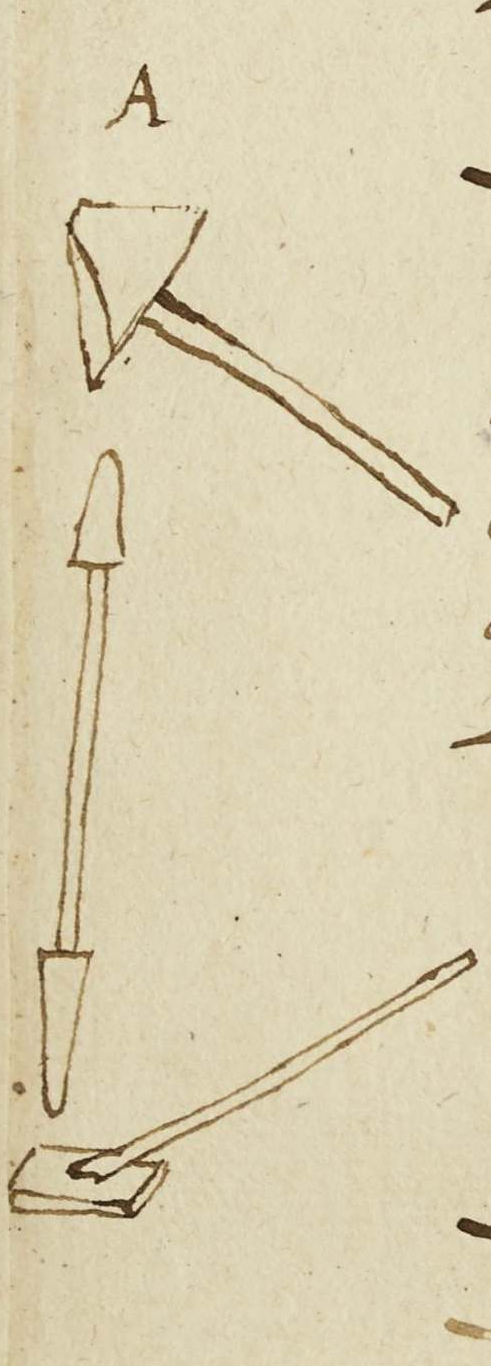
is called the mallet, which has a triangular form like A, and with this,
one first tamps the earth. Next one uses one which is made of blocks of
wood pointed at the tip & helved to a large stick, & this one is for
pressing the earth well at the extremities and edges of the wall, which
adhere to the boards, & is called.*3
The other one is called the bat, which is for flattening & beating the
earth for the last time, as shown in .C.*4 Then one makes
another layer of earth & heather and beats it as was said, & continues
thus until the wall is complete, which one covers with heather & then
with earth. Some m intermix rows of bricks in the said wall. They
also make the wall tapering, giving a width to the foundations
according to how high one wants to raise the wall.
Which, when old, whitens, & thereby shows that it has
saltpeter in it. That is why, when they fall down, gunpowder makers
profit from them.
Notes: [1] On earth fortifications at this time, see Daniela Lamberini, Il Sanmarino. Giovan Battista Belluzzi architetto militare e trattatista del cinquecento (Florence: Leo S. Olschki, 2007), which discusses a manuscript treatise from ca. 1550 by architect Giovanni Battista Belluzzi (1506–1554).
[2] Abbreviation for stratum super stratum (Latin: “layer upon layer”) used in alchemical writings, among others.
[3] Word omitted (no blank space). The author-practitioner seems to have forgotten to name this tool. Presumably, he is referring to the middle instrument in the marginal drawing, which he may have intended to label “B.”
[4] Though none of the instruments in the margin is marked “C,” the author-practitioner is presumably referring to the bottom drawing.
2.2 Embodied Material Knowledge Encoded in the Text
Unlike modern materials science, sixteenth-century earthen construction relied on no standardized tests or quantifiable parameters. Instead, its knowledge system was fundamentally embodied: builders assessed material behavior through touch, resistance, moisture, sound, and the visible behavior of soils and plants under manipulation. Fr. 640 captures this sensory-material epistemology not through explicit explanation, but through the operations, adjectives, and evaluative cues embedded in its language.7
The vocabulary of the recipe, such as “moisten,” “cut,” “intermix,” “place,” “arrange,” “beat,” and “tamp,” functions as an archive of embodied operations. Each verb encodes a bodily technique while simultaneously pointing to a material state that must be recognized and judged. Table 1 summarizes these categories of embodied knowledge, ranging from sensory judgement, to tool-mediated actions, to assessments of structural performance.
Table 1: Summary of embodied knowledge categories in Fr. 640
| Embodied knowledge category | Embodied cues summary |
|---|---|
| Sensory judgement | Touch, moisture, resistance, weight, cohesion, whether it cracks, etc. |
| Embodied operations | “Moisten,” “cut,” “lifting,” “place and arrange,” “layering,” “intermixing,” “tamp & beat,” “flatting & beating” |
| Material condition and behavior | “light earth,” “not forming clumps,” “moisten it,” “cut into sods,” “not crack,” “intermix [with heather branches],” “old,” “whitens,” “has saltpeter” |
| Tools-body-material interactions | Three types of beaters (mallet, pointed beater, bat) and their distinct functions |
| Structural performance | “Last longer,” “crack & split,” “adhere to boards,” “wall tapering” |
At the same time, the manuscript embeds implicit material logic. Descriptions such as “light earth, which does not form clumps,” “moisten it,” or “cut it into the shape of sods” indicate how builders inferred mechanical and material properties through embodied engagement. Table 2 maps these textual cues to the material judgements they imply. In this system, knowing how soil-plant composites behave mechanically was inseparable from the sensory experience of working them. This embodied epistemology provides the conceptual basis for the experimental reconstruction undertaken in this study.
Table 2: Textual evidence mapped to sensory judgement and material logic
| Historical text | Category | Artisanal judgement | Implied material logic |
|---|---|---|---|
| “light earth, which does not form clumps when plowed” | Material condition and behaviour + Sensory judgement | Stability judged by visual cracking behaviour | Low-cohesion soils compact better and crack less |
| “light earth… can be beaten & tamped down better” | Structural performance | Ease of beating signals compactability | Granular soils densify efficiently |
| “moisten it” | Sensory judgement | Hand-feel of moisture being “right” | Moisture controls plasticity and compaction |
| “place & arrange it” | Embodied operations | Visual/tactile sense of stability when placing layers | Layer placement affects interlayer bonding |
| “dryness does not make it crack & split” | Structural performance | Observation of cracking during drying | Material with correct moisture and plants shrinks less |
| “making each layer one foot thick | Embodied operations | Hand/eye estimation of layer thickness | Layer thickness influences compaction and stress transfer |
| “intermixing it… with branches of heather or similar things” | Material condition and behaviour | Judging plants distribution visually and by feel | Plants bridging and crack deflection |
| “tamp it & beat it” | Tools-body-material interactions | Sound, vibration, arm feedback indicate density | Compaction controls strength and durability |
| “three different forms (of beaters)… first tamps the earth” | Tools-body-material interactions | Tool shape changes type of compaction achieved | Different compaction modes affect density |
| “pressing the earth well at the extremities and edges” | Tools-body-material interactions | Tool resistance and wall reaction indicate edge density | Edges are weak, which means that they need extra compaction |
| “adhere to the boards” | Structural performance | Observing adhesion or slumping | Stability depends on moisture and compaction |
| “flattening & beating the earth for the last time” | Tools-body-material interactions | Visual judgement of surface smoothness and firmness | Surface densification improves integrity |
| “whitens… shows that it has saltpeter in it” | Material condition + behaviour | Visual perception of efflorescence | Salt migration indicates moisture transport |
3. Experimental Reconstruction
Beyond this, however, the entry leaves much unsaid. It does not specify material proportions, nor does it clarify what is meant by terms such as “intermixing,” “tamping,” or “moistened earth.” This textual indeterminacy is not an omission but reflects knowledge that was expected to be acquired through making. Reconstruction, therefore, becomes a method of interpreting not only the recipe itself but also its silences. By making the mixture, this project seeks to test how earth and heather interact with hands and tools, and how, in turn, the maker’s movements are shaped by their behavior.
3.1 Materials and tools
For the reconstruction, I selected a clay-rich soil (soil a) and sieved it to remove particles larger than 5 mm, producing a more uniform and workable base material. When necessary, I incorporated a small proportion of sand-rich soil (soil b) to adjust texture and reduce excessive plasticity during mixing. Dried heather branches served as the organic reinforcing component. I cut locally available heather into lengths of approximately 30 mm to approximate the dimensions implied in the manuscript and to facilitate even distribution within the mixture. Water functioned as the sole wetting and binding agent and was added incrementally as I mixed, until the material reached a consistency suitable for compaction. I then placed the prepared mixture into wooden molds measuring 20 × 20 × 10 cm and compacted it using wooden tools. These included a tamper (used both for tamping and flat beating), a triangular tool (functioning alternately as a pointed edge tool and a triangular beater), and additional flat beating implements (see Figure 1).
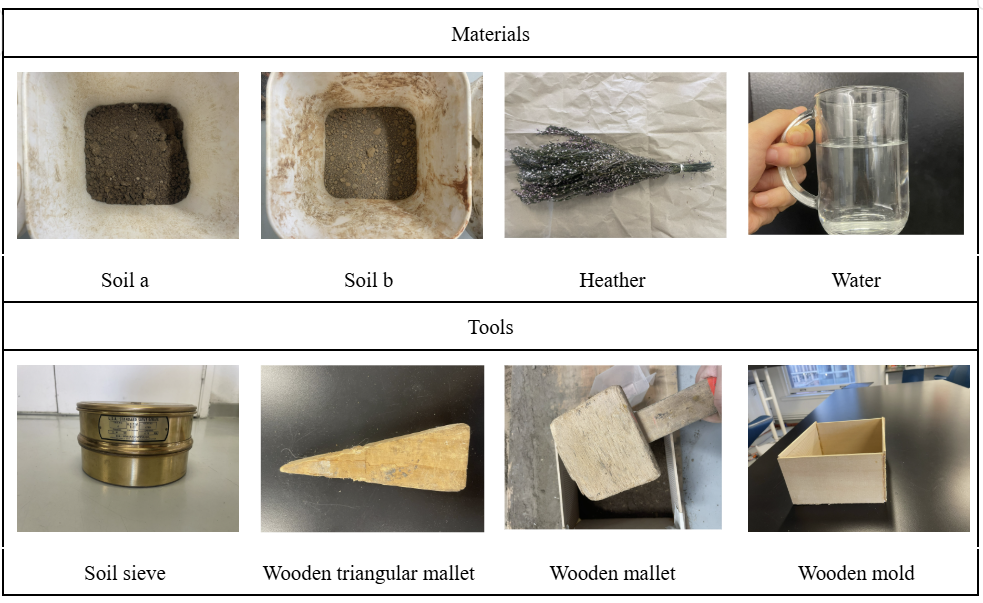
Figure 1: Materials and tools
3.2 Procedure: Making and Knowing
3.2.1 Soil Preparation
The manuscript distinguishes between two categories of soil: “light earth” and “fertile land.” I understand light earth as a soil intermixed with sand, characterized by a loose and lightweight structure and exhibiting limited plasticity when moistened. By contrast, fertile land in this context does not refer to agriculturally productive soil, but to an earth with greater inherent cohesion, offering builders a viable alternative when light earth was unavailable. I therefore interpret fertile land as a clay-rich soil with lower sand content and higher natural plasticity.
During the preparation process, I first manually broke apart large clods of soil and then sieved the material to remove particles larger than 5 mm, eliminating coarse stones and organic debris. This process transformed the initially irregular and heterogeneous soil into a finer, more uniform material that was more workable for the subsequent stages of mixing and compaction.
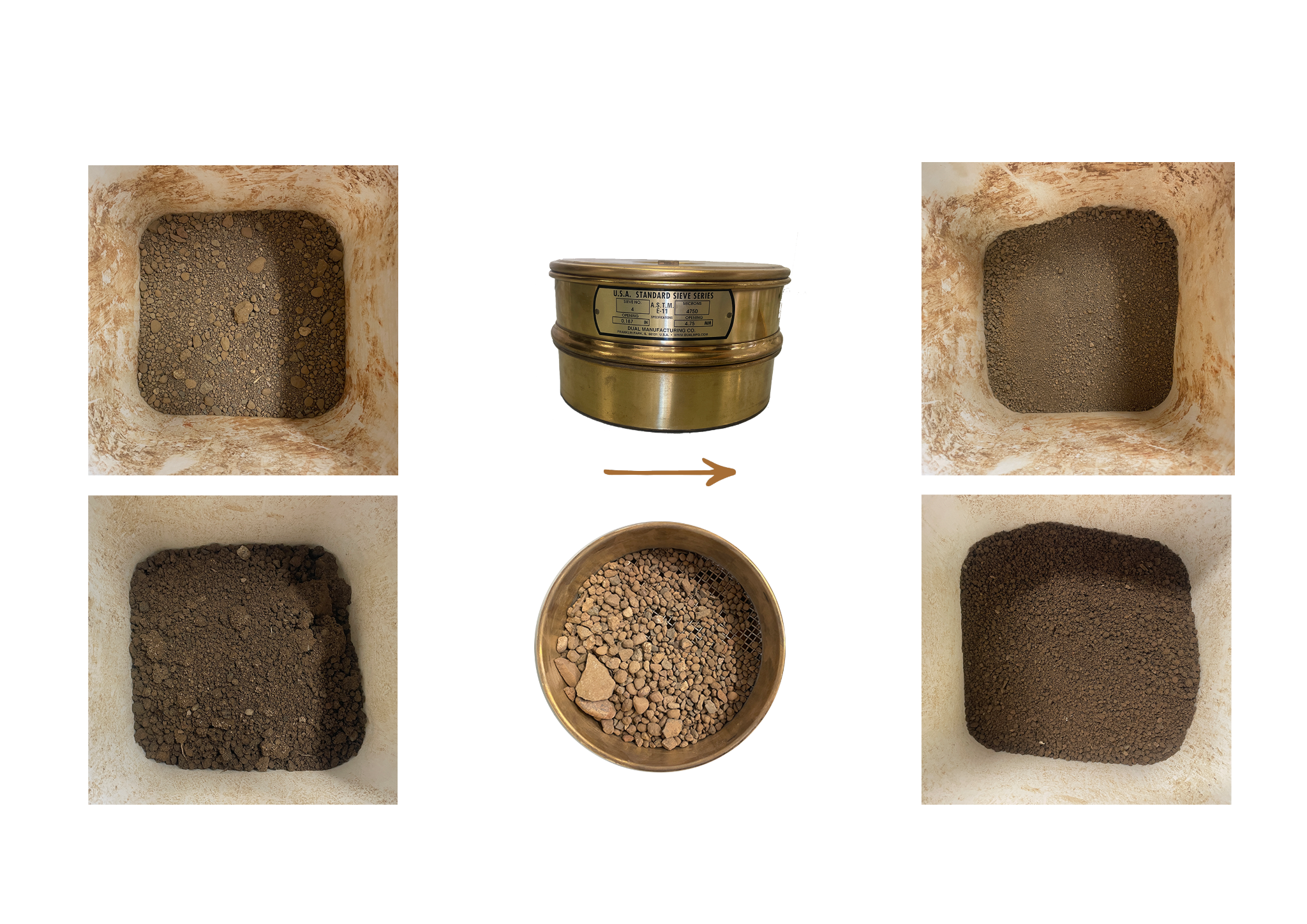
Figure 2: Soil preparation process
3.2.2 Heather Preparation and Incorporation
The manuscript’s instruction to “intermix it with branches of heather or similar things” provides a clear indication of the intended material category, yet offers no detail regarding the size, form, or specific preparation of the plant matter. Drawing on both historical and contemporary construction practices, where plant materials such as straw are routinely incorporated into earthen mixes, I inferred that such materials would have undergone basic preparation prior to use. Accordingly, I employed dried heather branches and cut into segments of approximately 30 mm. This length approximates the structural role implied by the term “branches” in the manuscript while ensuring adequate dispersibility within a small-scale model.
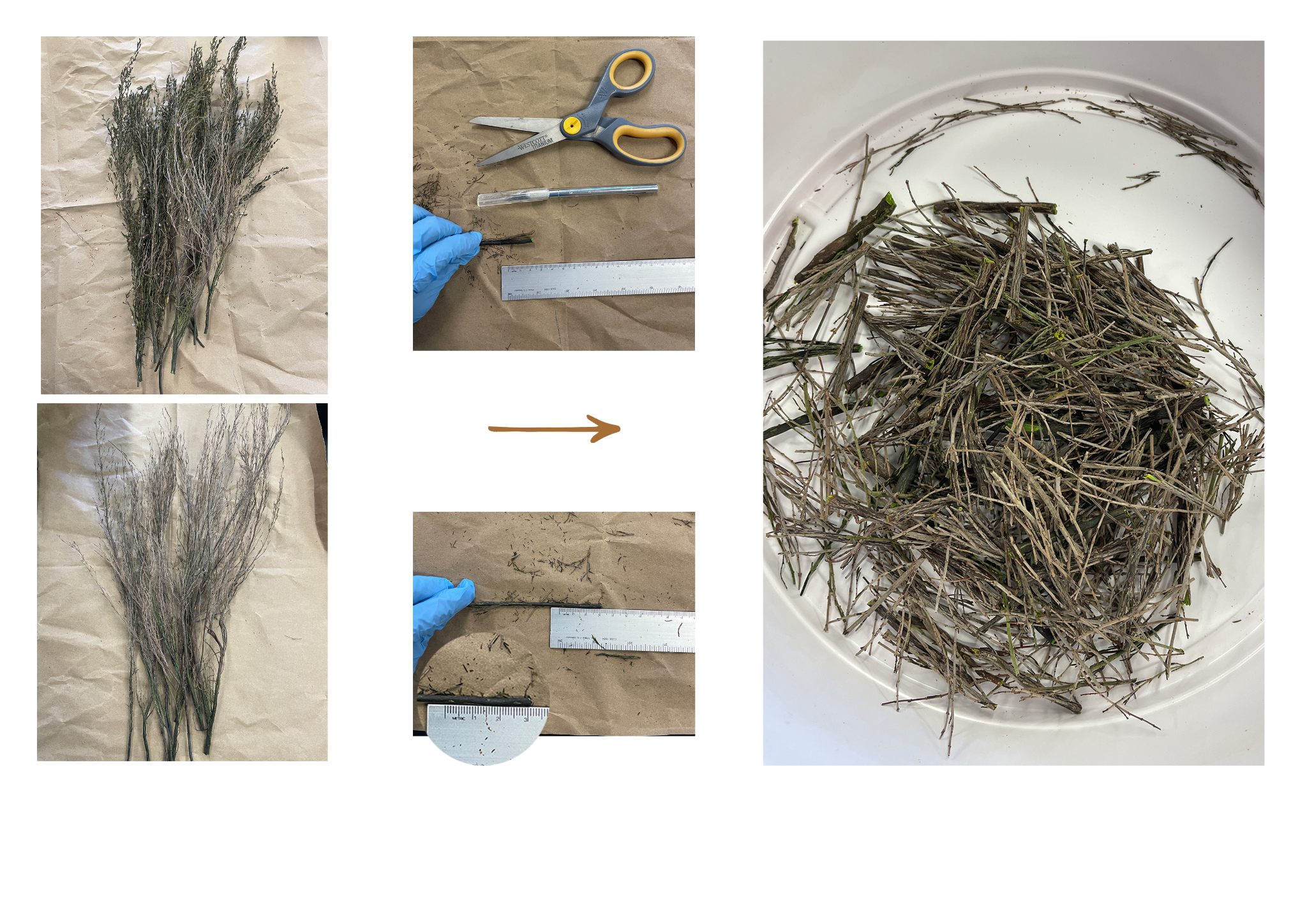
Figure 3: Heather preparation process
3.2.3 Mixing and Establishing Workability
After initially combining the soil and heather, I adjusted the moisture content of the mixture to achieve a workable consistency suitable for forming and compaction. The manuscript refers only to “moistened earth,” a term that encompasses a wide range of possible conditions and offers no technical specification. I therefore determined the appropriate level of hydration by attending to the observable behavior of the material and to sensory feedback obtained through manual handling.
When the mixture contained excessive moisture, it adhered strongly to my hands; when insufficiently wetted, the soil failed to adequately coat and integrate with the plants, compromising both the continuity of the mix and its response to compaction. By incrementally controlling the addition of water and repeatedly kneading and pressing the material, I brought the mixture into a cohesive, plastic, and non-sticky state (see Figure 4).
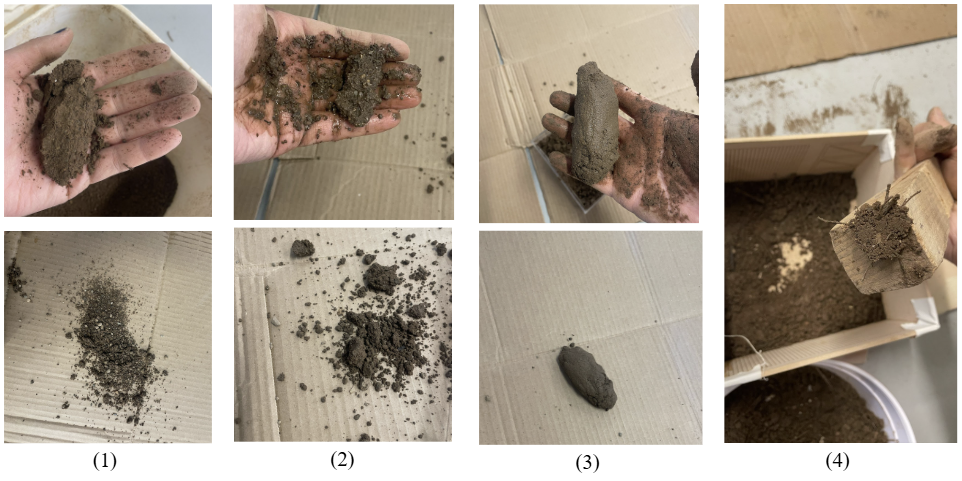
Figure 4: Moisture content and test
(1) Low moisture: cohesive in hand but crumbles on impact
When squeezed in the hand, the mixture holds together lightly and does not stick to the skin. However, when dropped freely, it immediately breaks apart into loose granules. This indicates insufficient hydration and low plasticity.
(2) Moderately medium moisture: partial cohesion with minor stickiness
The mixture shows slight adhesion to the hand and contains small, partially hydrated aggregates. When dropped, it breaks into a combination of granules and small clods.
(3) & (4) Excess moisture: overly sticky, adheres to tools during compaction
The initial hydration for testing was too high. During ramming, soil adhered to the wooden rammer, forming lumps on the tool surface. This indicates over-saturation, reducing compaction efficiency.
For the final reconstruction, I adopted a volumetric ratio of 1:1/2 (clay-rich soil to sandier soil) to balance plasticity with reduced stickiness and improved internal stability. I added water gradually in small increments, allowing the mixture to approach the desired consistency step by step. Once mixing was complete, the approximate ratio of components was 4:2:1 (clay-rich soil : sandier soil : water). The quantity of heather was set at roughly one quarter of the mass of the clay-rich base soil (see Figure 5).
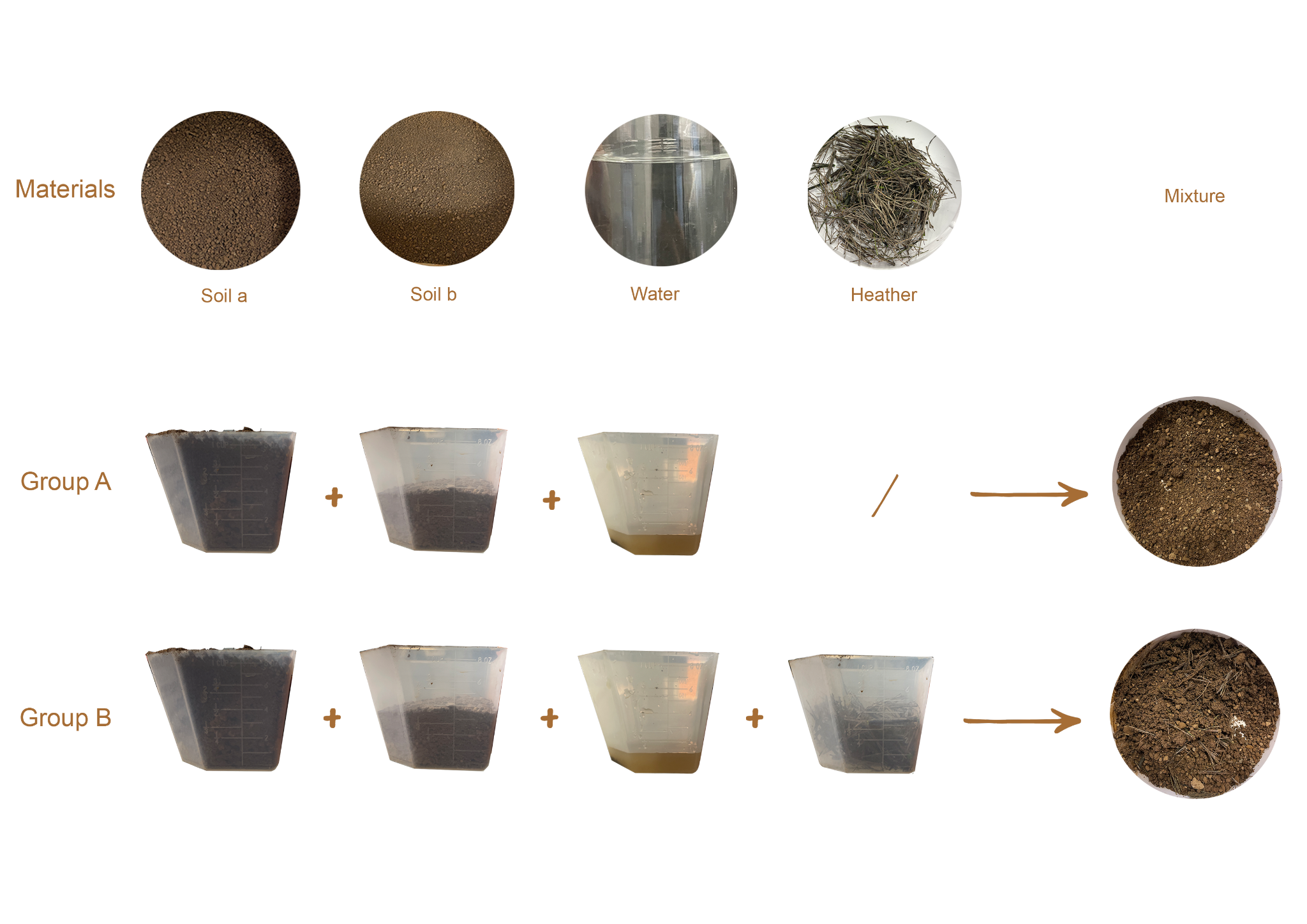
Figure 5: Mixture ratio for the reconstruction
3.2.4 Forming and Tamping
Based on the manuscript’s instruction to place the material in successive layers, I introduced the mixture into the wooden mold in discrete batches, with each addition constituting approximately one unit of volume (8 oz). After placing each batch, I applied a preliminary light compaction to eliminate major voids and allow the soil and heather to settle into an initial configuration. This preparatory step ensured a relatively uniform distribution of material prior to the main tamping phase and improved the effectiveness of subsequent densification.
Ramming and tamping constituted the most critical operation in the reconstruction. The manuscript summarizes this procedure as “beaten & tamped down” and distinguishes between three different implements, suggesting that historical practice relied on a multi-stage and differentiated sequence of impacts rather than a single, uniform action.
Following the initial settling of each layer, I performed sustained and evenly distributed tamping to gradually increase density. In the early stages of tamping, both mixtures produced a relatively sharp, high-pitched sound, which I interpret as resulting from the presence of substantial internal voids. The mixture containing heather exhibited an even crisper initial sound profile, likely due to the rigidity of the plants and their tendency to create localized rebound or micro-voids prior to full densification. As tamping progressed, both mixtures transitioned toward a duller, lower-frequency sound, signaling that the material had reached a near-maximal degree of compaction. In the absence of quantified mechanical parameters in the historical text, I relied on this acoustic feedback as a primary indicator of compaction quality.
The three tools described in the manuscript: the mallet, the pointed beater, and the flat beating bat, each performed distinct functions within the ramming sequence. In practice, their use revealed different layers of craft knowledge embedded in the text. The mallet is described as the tool used to “first tamp the earth.” During reconstruction, its broad striking face and moderate weight proved effective in initiating compaction, allowing the loose mixture to settle evenly within the mold. The clear, resonant sound produced upon impact enabled me to perceive the abundance of internal voids at this early stage.
The second tool, composed of a pointed wooden block attached to a thick handle, is designated for pressing the earth firmly at the extremities and edges of the wall. In the reconstruction, I used the pointed end of a triangular mallet to simulate the concentrated force of this edge-compacting implement. Using it made immediately apparent why the manuscript differentiates between edge compaction and general compaction: material behavior at constrained boundaries differs markedly from that in open areas and requires targeted, localized force.
The final tool, the bat, is described as being used to “flatten and beat the earth for the last time.” This broad, flat implement delivers a dispersed, low-impact strike that levels the surface without penetrating deeply into the compacted layer. In practice, the bat rendered the quality of earlier stages of compaction perceptible through both tactile and auditory feedback. Uneven resistance, surface vibration, or tonal variation indicated inconsistencies in density, revealing areas where prior compaction had been insufficient. As a finishing tool, it thus made both visible and audible the cumulative effectiveness of the preceding operations.
After completing tamping across all layers, the surface of the material presented a continuous, level, and visibly compacted finish, with no loose particles or exposed heathers.
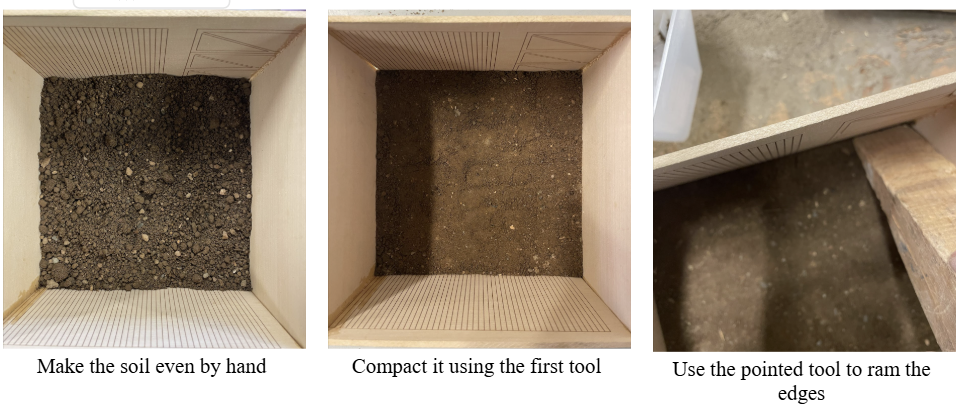
Figure 6: Forming and ramming
3.2.5 Demolding
The manuscript provides no indication regarding the appropriate timing or method for releasing the formed block from its mold. In early modern practice, I understand this step to have relied primarily on the craftsperson’s experiential judgment rather than on prescriptive instruction.
During demolding, I found the most sensitive areas to be the edges, particularly the four corners. Careful handling at these points proved essential, underscoring that successful release depends both on the quality of prior compaction and on the operator’s tactile assessment of when the material has acquired sufficient cohesion to withstand removal. This process also reinforced the importance of using pointed tools during compaction, as adequate densification at the corners directly affected the stability of the block during demolding.
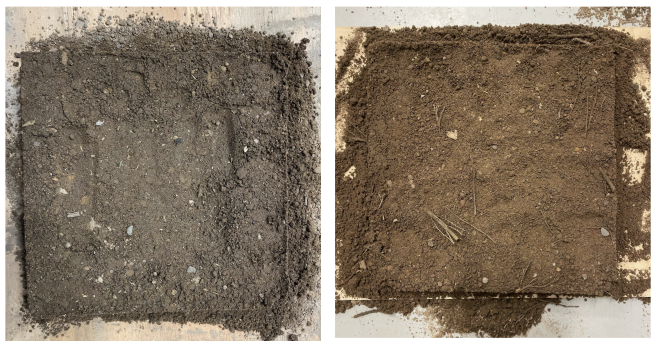
Figure 7: Demolding process (left: group a; right: group b–with heather)
3.2.6. Drying
After demolding, I left the mixtures to dry at room temperature and recorded their condition. During this drying phase, I observed the gradual development of surface cracking. The cracks were more pronounced in the mixture containing heather. This stage revealed a material response that was not apparent during mixing, forming, or tamping, underscoring the significance of drying as a distinct phase in the reconstruction process. As moisture was lost, differential shrinkage between the earthen matrix and the heather generated localized stress concentrations that manifested as surface cracking. The observation underscores the importance of understanding earthen construction as a sequence of interrelated stages. It also suggests that controlling water required historical builders to rely on their experiences.
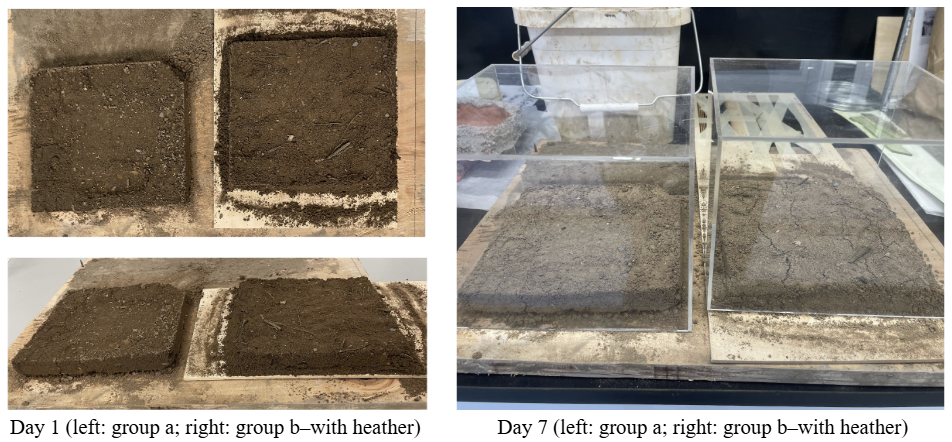
Figure 8: Drying process
4. Reflection
4.1 Material Feedback and Sensory Judgement
In the reconstruction process, the material itself emerged as an active participant, continuously signaling its condition through resistance, moisture gradients, texture, and sound, articulating a form of material agency in which knowledge is produced through making, handling, and sensory judgment.8 What the manuscript labels simply as “moistened earth” in practice unfolded into a spectrum of intermediate states that had to be sensed rather than measured. When the mixture was too dry, the soil refused to envelop the heathers; when too wet, it clung to the hands. These transitions revealed how early modern builders navigated material uncertainty not by reference to fixed parameters but through multisensory, iterative engagement.
Mixing, therefore, was not merely preparatory. It functioned as a place where hand-feel, visual assessment, and the sonic qualities of the soil-plant composite established the operative rhythm and sequencing of the work. Through repeated adjustments, the craftsperson learned to recognize when the mixture reached the momentary equilibrium required for placement and compaction.
4.2 Tool Logic as Reflection of Tacit Knowledge
The sequential use of the mallet, the pointed wooden rammer, and the bat reveals a form of tacit knowledge. Each tool embodies a specific logic of material intervention, and only revealed through the reconstruction. The manuscript’s concise phrasing—“beaten & tamped down”—compresses multiple technical operations that rely on embodied distinctions among force, angle, distribution, and rhythm.
This multi-tool sequence exemplifies craft-based tacit knowledge, in which understanding emerges through the interplay of gesture, feedback, and material resistance rather than through explicit theoretical articulation. The logic of why one tool must precede another, or why edge tamping cannot be substituted with general tamping, becomes intelligible only through practice. Through reconstruction, the tools function not merely as implements of fabrication but as epistemic devices that make material states perceptible, allowing the practitioner to “read” density, moisture, and consolidation through sound, vibration, and resistance. In this sense, the toolset serves as a pedagogical mechanism embedded within the craft tradition, enabling early modern builders to transmit complex process knowledge without the need for extensive written explanation.
4.3 Unexpected Insights into Tool Choice: The Practical Logic of Cutting Heather
The reconstruction also revealed a category of tacit knowledge absent from the manuscript: the appropriateness of tools in relation to material properties. In attempting to cut the heather branches, scissors and knives were initially employed, but the woody, fibrous nature of dried heather proved resistant to clean slicing. The most effective method ultimately was not precise cutting but rather snapping the branches by hand.
This observation suggests that early modern artisans did not necessarily prioritize precision cutting tools; instead, tool choice followed a practice-driven logic shaped by the material’s inherent affordances and by the structural function of the plants within the wall. The ease with which dried branches fracture becomes itself a kind of “material-tool compatibility,” a form of tacit understanding that would not require textual articulation and could only be recognized through hands-on engagement.
5. Conclusion
This reconstruction recipe from BnF Ms. Fr. 640 reveals the intricate interplay among material selection, craft procedures, and sensory judgment that underpinned early modern construction practices. The reconstruction demonstrates that the core knowledge on which it relies does not reside in written language alone. Rather, it emerges from the behavior of materials, the pacing of operations, and the tacit forms of judgment developed through embodied experience.
Across the stages of mixing, forming, tamping, and drying, the material communicated its condition through resistance, moisture gradients, acoustic signals, and structural transformation. The behavior of heathers rendered the instruction to “intermix it with branches of heather” not as a vague historical reference but as a technically meaningful choice within the construction system.
The reconstruction further reveals that the manuscript’s numerous “silences” are structurally significant. Critical operations—assessing moisture content, determining layer thickness, modulating tamping force, selecting tools—are not specified in the text because such knowledge cannot be effectively conveyed through verbal description. Instead, these judgments depend on sensory engagement, particularly touch, sound, and iterative feedback. The value of reconstruction lies precisely in its capacity to activate these omitted dimensions, allowing the manuscript’s implicit empirical knowledge to become newly visible.
Reconstruction allows us to re-enter the manuscript’s making environment, to perceive how materials “instructed” the maker through their responses, and to recover layers of craft knowledge that remain inaccessible through textual analysis alone.
Bibliography
Chepel, Victoria, Valery Lisun, and Liubov Skrypnik. “Changes in the Content of Some Groups of Phenolic Compounds and Biological Activity of Extracts of Various Parts of Heather (Calluna vulgaris (L.) Hull) at Different Growth Stages.” Plants 9, no. 8 (2020): 926. https://doi.org/10.3390/plants9080926.
Lamberini, Daniela. Il Sanmarino: Giovan Battista Belluzzi architetto militare e trattatista del cinquecento. Florence: Leo S. Olschki, 2007.
Grokipedia. “Sod Roof.” 2023. Accessed November 23, 2025. https://grokipedia.com/page/Sod_roof.
Le Paih. L’utilisation du matériau terre pour l’entretien des immeubles à pans de bois de la ville de Rennes. Mémoire de DSA “Architecture de terre,” CRAterre–ENSAG, Grenoble, 2010.
Lehmann, Ann-Sophie.“Wedging, Throwing, Dipping and Dragging: How Motions, Tools and Materials Make Art.” In Folded Stones, 41–60. Ghent: Universiteit Gent; Katholieke Universiteit Leuven, 2009.
McDiarmid, A. “Where Did All the Highlanders Go?” Simply Scottish Blog, August 6, 2013. https://simplyscottish.wordpress.com/2013/08/06/where-did-all-the-highlanders-go/#:~:text=life%20today.
Natural Resources and Environment Tasmania. Weed Risk Assessment:
Calluna vulgaris – 1. Plant Details. Hobart: NRE Tasmania,
[publication date unknown]. PDF.
https://nre.tas.gov.au/Documents/Calluna-vulgaris-assessment.pdf.
Smith, Pamela H. “Experimenting in the Material World and on Paper in Sixteenth-Century France.” Technè: La science au service de l’histoire de l’art et de la préservation des biens culturels, no. 47 (2019): 18–29.
Taape, Tillmann. “‘Experience Will Teach You’: Recording, Testing, Knowing, and the Language of Experience in Ms. Fr. 640.” In Secrets of Craft and Nature in Renaissance France: A Digital Critical Edition and English Translation of BnF Ms. Fr. 640, edited by Making and Knowing Project et al. (New York: Making and Knowing Project, 2020). https://edition640.makingandknowing.org/#/essays/ann_303_ie_19. https://doi.org/10.7916/njnq-6q58.
Taape, Tillmann. “The Body and the Senses in Ms. Fr. 640: Towards a
‘Material Sensorium.’”
In Secrets of Craft and Nature in Renaissance France: A Digital
Critical Edition and English Translation of BnF Ms. Fr. 640, edited by
Making and Knowing Project et al. (New York: Making and Knowing Project,
2020).
https://edition640.makingandknowing.org/#/essays/ann_302_ie_19.
https://doi.org/10.7916/027y-d055.
Tiez Breiz. “Le matériau terre crue.” Accessed November 23, 2025. https://tiez-breiz.bzh/fiches-techniques/le-materiau-terre-crue/#:~:text=La%20terre%20est%20m%C3%A9lang%C3%A9e%20%C3%A0
Pamela H. Smith, “Experimenting in the Material World and on Paper in Sixteenth-Century France,” Technè: La science au service de l’histoire de l’art et de la préservation des biens culturels, no. 47 (2019): 18–29. ↩︎
Daniela Lamberini, Il Sanmarino: Giovan Battista Belluzzi architetto militare e trattatista del cinquecento (Florence: Leo S. Olschki, 2007), 425–427. ↩︎
Natural Resources and Environment Tasmania, Weed Risk Assessment: Calluna vulgaris – 1. Plant Details (Hobart: NRE Tasmania, [publication date unknown]), https://nre.tas.gov.au/Documents/Calluna-vulgaris-assessment.pdf; Victoria Chepel, Valery Lisun, and Liubov Skrypnik, “Changes in the Content of Some Groups of Phenolic Compounds and Biological Activity of Extracts of Various Parts of Heather (Calluna vulgaris (L.) Hull) at Different Growth Stages,” Plants 9, no. 8 (2020): 926, https://doi.org/10.3390/plants9080926 ↩︎
Tiez Breiz, “Le matériau terre crue,” accessed November 23, 2025, https://tiez-breiz.bzh/fiches-techniques/le-materiau-terre-crue/#:~:text=La%20terre%20est%20m%C3%A9lang%C3%A9e%20%C3%A0,dire%20recoup%C3%A9%20verticalement; Le Paih, L’utilisation du matériau terre pour l’entretien des immeubles à pans de bois de la ville de Rennes (Mémoire de DSA “Architecture de terre,” CRAterre–ENSAG, Grenoble, 2010). ↩︎
A. McDiarmid, “Where Did All the Highlanders Go?,” Simply Scottish Blog, August 6, 2013, https://simplyscottish.wordpress.com/2013/08/06/where-did-all-the-highlanders-go/#:~:text=life%20today,cutlery%20was%20sparse%20and%20handmade ↩︎
Grokipedia, “Sod Roof,” 2023, accessed November 23, 2025, https://grokipedia.com/page/Sod_roof ↩︎
Tillmann Taape, “The Body and the Senses in Ms. Fr. 640: Towards a ‘Material Sensorium,’” in Secrets of Craft and Nature in Renaissance France: A Digital Critical Edition and English Translation of BnF Ms. Fr. 640, ed. Pamela H. Smith et al. (New York: Making and Knowing Project, 2020), https://edition640.makingandknowing.org/#/essays/ann_302_ie_19, https://doi.org/10.7916/027y-d055. ↩︎
Ann-Sophie Lehmann, “Wedging, Throwing, Dipping and Dragging: How Motions, Tools and Materials Make Art,” in Folded Stones (Ghent: Universiteit Gent; Katholieke Universiteit Leuven, 2009), 41–60. ↩︎