Student Projects
Student Projects
In all Making and Knowing courses students create a final project. In Craft and Science, students carried out reconstructions of processes in Ms. Fr. 640 and wrote essays, which were published as part of the Ms. Fr. 640 edition, Secrets of Craft and Nature. In other Making and Knowing courses, including Hands-on History, students create a final project that engages with Secrets of Craft and Nature. Browse their projects for ideas about how to engage with Secrets of Craft and Nature and for integrating hands-on activities into your courses.
GU4962: Making and Knowing in Early Modern Europe: Hands-On History (2021-2025)
In Making and Knowing in Early Modern Europe: Hands-On History, undergrad and grad students explore Secrets of Craft and Nature, carry out hands-on lessons, and develop a project that engages with hands-on activities, materials, techniques, and any number of other themes.
Their exploratory and experimental projects serve as companion pieces to Secrets of Craft and Nature or mark out alternative pathways into the edition. Projects range from humorous to scholarly, pedagogical, and public facing. Instructors and students can find in them inspiration and pathways by which to explore Ms. Fr. 640 and its digital edition.
Fall 2025 Student Projects [Syllabus]
In fall 2025, the Making and Knowing Project once again hosted dyer-weaver Bertha Estrada Huipe and her son and assistant Mateo Estrada Rodriguez from Ahuirán, Mexico. Students worked alongside Bertha and Mateo, learning to weave, making natural dyes from brazilwood, indigo, marigold flowers, oak bark, and cochineal, and learning about the many forms of knowledge (environmental, cultural, and tacit) that are embedded in Purépecha dyeing techniques. See these videos from the shared sessions: Video: Meet Bertha and Mateo: Expert Dyers and Weavers, Video: Making Natural Dyes, and Video: Dyeing and Weaving Showcase. Students built on this experience in their projects.
- Reconstructing Heather-Reinforced Earth: Material Understanding and Embodied Knowledge in Ms. Fr. 640 by Xin Gao
- Color, Chemistry, and Craft: Investigating the Effects of pH and Water Hardness on Coconut-Husk Natural Dyeing by Chinmay Kumar
- Exhibition: Making and Knowing. An Exploration in Craft by Emma Riddle
- “Seulement” Soaking Horn: Ms. Fr. 640’s Recipe for Softening Horn by Sophie Kerwin
- Park to Palette: Turning Long Island Flora into Natural Dyes by Blessing Bafunso
- “A Very Rare & Tested Secret”: Recipes Against Plague in BnF Ms. Fr. 640 by Alice Bai
- Purple in Ms. Fr. 640 and how “Painters make it beautiful” by Debaleena Bagchi
Fall 2024 Student Projects [Syllabus]
In fall 2024, the Making and Knowing Project hosted dyer-weaver Bertha Estrada Huipe and her son and assistant Mateo Estrada Rodriguez from Ahuirán, Mexico. Over 10 days, students worked alongside Bertha and Mateo, making natural dyes from marigold flowers, coconut husks, pomegranate peels, oak bark, and cochineal, and learning about the many forms of knowledge (environmental, cultural, and tacit) that are embedded in Purépecha dyeing techniques. See the video overview and presentation with dyeing session accounts. Students built on this experience in their projects.
- Intertextuality and the Anonymous Author-Practitioner of Ms. Fr. 640 by Javier Ardila
- Red: Experiments in Cochineal Dyeing Techniques with Varying Mordants by Lily Bunger
- Dying Azur: The Death of Blue in Ms. Fr. 640 by Sheena McKeever
- Patterning Techniques for Natural Dyes: An Iterative Approach to Making and Knowing by Sabina Diaz-Rimal and Kian Hosseinnia
- An Exploration of Natural Pigments by Cerrina Lai
- To Redden (Rougir): the Language of Color, Observation, and Transformation in Ms. Fr. 640 by Roya Chu
Spring 2023 Student Projects [Syllabus]
- “Flesh Color” and Race Making in Early Modern Painters’ Manuals by Ruilin Fan
- Languages and Linguistic Agency in Ms. Fr. 640 by Gilles Narcy
- Medieval Spirituality and Materiality in Ms. Fr. 640 by Avery Lambert
- Kunstkamer: Women at Work by Sophie Gorup
- Candles: Making and Breaking Boundaries in Early Modern Jewish and Christian Ritual by Nesya Nelkin
- Puffball Mushrooms and Early Modern Race-Making: A Skin-Whitening Recipe in BnF Ms. Fr. 640 by Sumant Rao
- European Paintbrushes and Chinese Ink Brushes in the Early Modern World by Jingxian Shi
- Dyeing Textiles with Cochineal - A Workshop by Reece Brown
- Varnishing, a Craft of Closure by Lukas Oberem
Spring 2022 Student Projects [Syllabus]
- Herodotus’ ‘Workshop’: A Core (Curriculum) Pathway into Ms. Fr. 640 and its Author-Practitioner by Alejandra Quintana Arocho
- Discarded Cartographies: Orienting Process Through Waste by Maciej Dzumala
- Counterproofing: Reproduction and Theft in Early Modern Print Culture by Theodora Bocanegra Lang
- Making and Knowing Pop-up Book by Luxi Yang and Jianing Wei
- Creating a “Modern” Reconstruction of a Miniature Grotto by Jamie Bergen and Sofia Sabet
- Cuttlefish in and around Ms. Fr. 640 by Maia Donald
- Sieves in Ms. Fr. 640 by Schuyler Gardner
- Animal Rationality in Ms. Fr. 640 by Victoria Nebolsin
Fall 2021 Student Projects [Syllabus]
- Transcribing, Translating, and Encoding MS Gen, 262: Sefer Refu’os u-Segulos / Book of Remedies and Incantations by Charlie Steinman
- See also the Github repo dedicated to this project ms-262-data
- Oral Culture in Ms. Fr. 640 by Hana Ghoneima
- The Color Red in Ms. Fr. 640 by Allie Coutavas
- Textual Analysis of Instances of “To Know” in Ms. Fr. 640 by Beah Jacobson
- Regimens, Recipes, and Remedies: Understanding the ‘Cosmetic’ in Early Modern Europe by Danli Lin and Anusha Sundar
- The Making and Meaning of Intermediates: Workshop and Syllabus for Students of Architecture by Benjamin Weisgall
- The Natural History of Ms. Fr. 640: A Visual Exploration by Eleanor Davol
- Instructor Assignment Sheet: Ms. Fr. 640 fol. 43v, “Varied and Transmuted Wine” by Naomi Alberts
- Global Ingredients: The Diverse Origins of Natural Materials in Ms. Fr. 640 (An archived Omeka exhibit with gallery and map) by Elia Zhang and Helena Seo
- An Exploration of Humor in Ms. Fr. 640 by Charlotte Atkins and Siobhan Joyce-Farley
- The Soundscape of Process: An Audio Recreation of Lifecasting in the Workshop by Elliot Zayas and Mac Waters
- Listen to Soundscape 1: Creating the Mold
- Listen to Soundscape 2: Casting the Metal
- Listen to Soundscape 3: Recovering the Final Product
Summer 2021 Student Projects [Syllabus]
- Cures in Context: Medicine in Ms. Fr. 640 and Household Recipe Books by Elizabeth Branscum
- Was Ms. Fr. 640 Intentionally Disorganized? by Mackenzie Fox
- Pictures Worth 1,000 Words: Figures and their Uses in Ms. Fr. 640 by Sophie Macomber
- Understanding Natural Things in the World and the Workshop by Anna Christensen
- Foraging for Pigments: A Making and Knowing Project by Mellon Snyder
Making Colors with Students
- Dyeing with Onion Skins by Annika Cunningham (2022-07-18)
- Making Pigment from Madder: a Trio of Recipes by Naomi Rosenkranz (2022-07-19)
- Materials Used for Making Renaissance Dyes and Pigments by Naomi Rosenkranz and Megan Lennon (2023-02-28)
ENGL84031 / HISTGU4031 / COMS4495: Transforming Texts (Spring 2019)
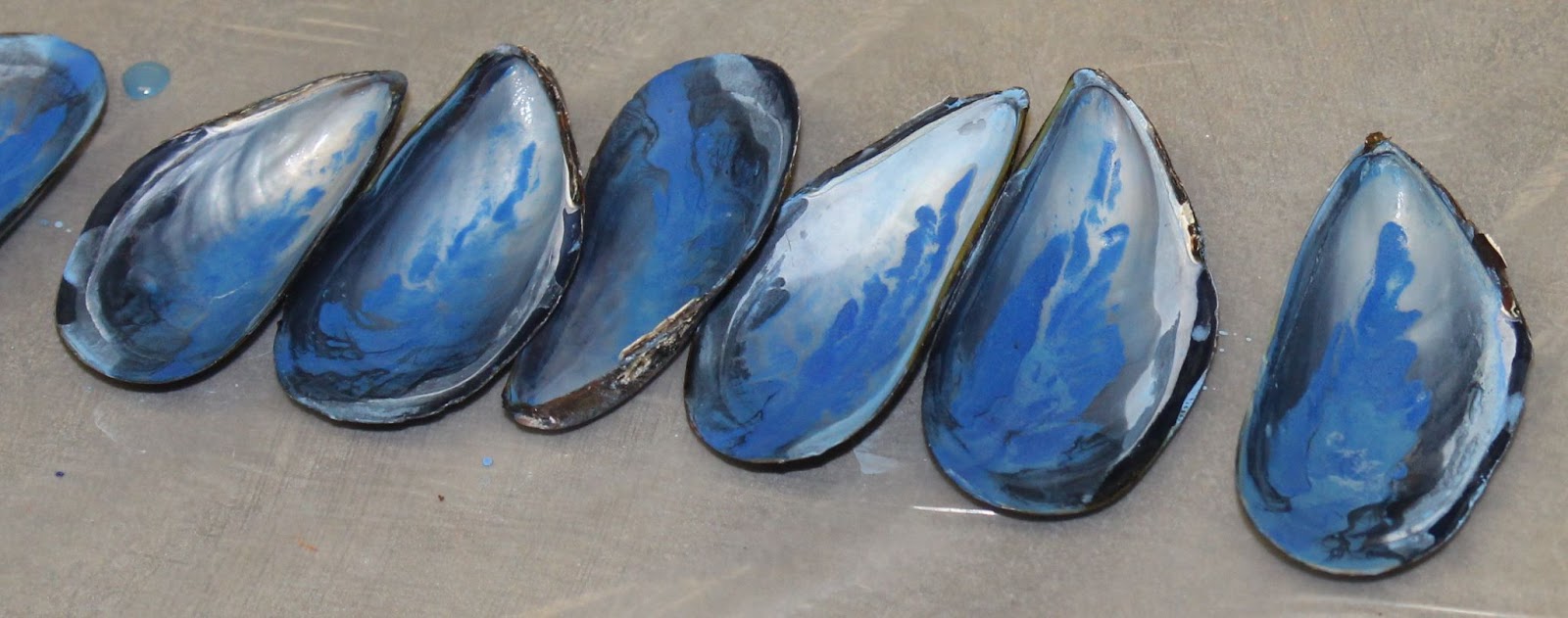
The Spring 2019 course Transforming Texts: Textual Analysis, Literary Modeling, and Visualization built upon M&K’s previous Digital and Lab Seminars. Geared towards students from the humanities and computer science, the course encouraged the disciplines to work together to analyze, explore, and understand historical texts.
Spring 2019 Student Projects [Syllabus]
- Ontologies of Ms. Fr. 640 by Celine Camps
- “A View Inside a Messy Workshop”: Unraveling the Possibilities of Textual Analysis with Optical Character Recognition by Katherine Bergen
- Material Qualities of the Page: A New Interface for the Digital Critical Edition by Sandra Goldstein Lehnert, Laura Elizabeth Hand, and Greg Alton Houser
- Indexing Ingredients: Using Ingredients to Navigate Making by Jennifer Kaplan, Chris Klippenstein, Matthew Kumar, and Vera Senina
- Chromatic Index by Guillermo Soto, Clement Godbarge, and Yuhe Zheng. See also PDF of PowerPoint presentation
- Augmented Reality Group (ARGroup) by Mahzabin Hasnath, Kathleen Lee, and Taewan Shim. See also PowerPoint presentation [PDF] [PPTX]
The Art Technological Source, University of Amsterdam & Making and Knowing (2015–2016)
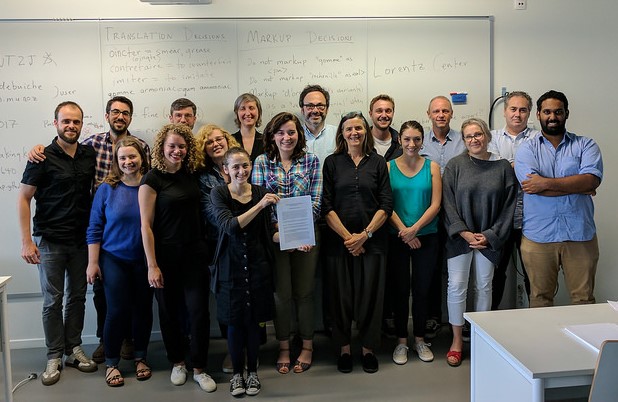
The Art Technological Source was an 8-week course offered several times in 2015 and 2016 by Dr. Marjolijn Bol in collaboration with the Making and Knowing Project to students enrolled in the University of Amsterdam’s MA programs in either Technical Art History or Conservation and Restoration. Students studied various recipes from BnF Ms. Fr. 640 on the following five topics: 1) tracing and painting on glass, 2) yellow dyes and their applications, 3) dragon’s blood, 4) painters’ varnishes, and 5) sieves.
These student papers have not been edited for style and accuracy, and they rely on an earlier state of the Project’s transcription and translation of Ms. Fr. 640. Nevertheless, they contain useful insights.
Tracing and Painting on Glass
- The Application of Monochrome Backgrounds in Reverse Glass Painting by Roy van der Wielen
- Tourmentine clere meslee d’un peu de l’arme de mastic: Resinous Binding Media in Reverse Glass Painting by Ilse Steeman
- On Scales Black / Noir d’escaille for Black Outlines in Reverse Glass Painting by Pilko Magdalena
- BnF Ms. Fr. 640, fol. 41v: “Colors and gilt on glass” by Rosa Hoogenboom
- The Challenges of Gilding on Glass: An Analysis of Adhering Methods for Gilding on Glass by Corinna de Regt
Dragon’s Blood
- The Use of “Dragon’s Blood” on Fol. 40v of Manuscript BnF Ms. Fr. 640 by Elisabeth Kuiper
- The Use of Eau de Vie in the Reconstruction of Dragon’s Blood by Marianne Nuij
- The Role of Dragon’s Blood in Falsifying and Imitating Red Gemstones by Ingeborg Kroon
- The Application of Dragon’s Blood on Metal by Michaela Groeneveld
Yellow Dyes and their Applications
- Chalk in Yellow Lake Pigments by Kayleigh van der Gulik
- A Complex Material Made Simple: Examining the Author-Practitioner’s Practical Understanding of Alum by Claire Molgat Laurin
- A Most Practical Approach: The Author-Practitioner’s Attitude Regarding the Topic of Durability and “Scudegrun” by Laura Wolfkamp
- “Juice of Weld”: Research into an Undefined Ingredient of Yellow Lake Pigment by Hedwig Braam
- BnF Ms. Fr. 640, fol. 29v: “Gold without Gold” by Moorea Hall-Aquitania
- The Use of Gold in BnF Ms. Fr. 640 by Eline van der Velde
Painters’ Varnishes
- “Drenched in Varnish”: The Role of the Penetrating Aspect of Aspic Oil as a Varnish Component by Rosa Boute
- Spike Lavender and Lavender Spikes: The Essence of Spike Lavender in the Varnish Recipes of BnF Ms. Fr. 640 by Sepha Wouda
- Distilling Essential Oils: BnF Ms. Fr. 640 and the Art of Distilling in the Sixteenth Century by Marjolein Hupkes
- Using Wine to Temper Laque: An Examination of the Role of Wine in Creating Paint by Noa Kollaard
Sieves
- Sieves Deconstructed: A Search into the Construction of Historic Sieves by Paulien Coopmans
- Fine Raw Silk Sieves and Horse Hair Sieves: How Sieves of Different Materials Obtain Various Textures by Lisanne van den Heuvel
Metal Conservation, University of Amsterdam & Making and Knowing (2014–2015)
In 2014 and 2015, University of Amsterdam instructors Tonny Beentjes, Ellen van Bork, and Tamar Davidowitz supervised student research projects on recipes from BnF Ms. Fr. 640 on moldmaking and metalworking as part of their coursework for the MA program in Conservation and Restoration.
These student projects have not been edited for style and accuracy, and they rely on an earlier state of the Project’s transcription and translation of Ms. Fr. 640. Nevertheless, they contain valuable research and insights about moldmaking in Ms. Fr. 640.
- Concerning the Incuse-Reverse Mold Casting of Medals by Michaela Groeneveld and Marianne Nuij
- The Use of “Spat” in the Preparation of Molds in BnF Ms. Fr. 640 by Elisabeth Kuiper and Ingeborg Kroon